
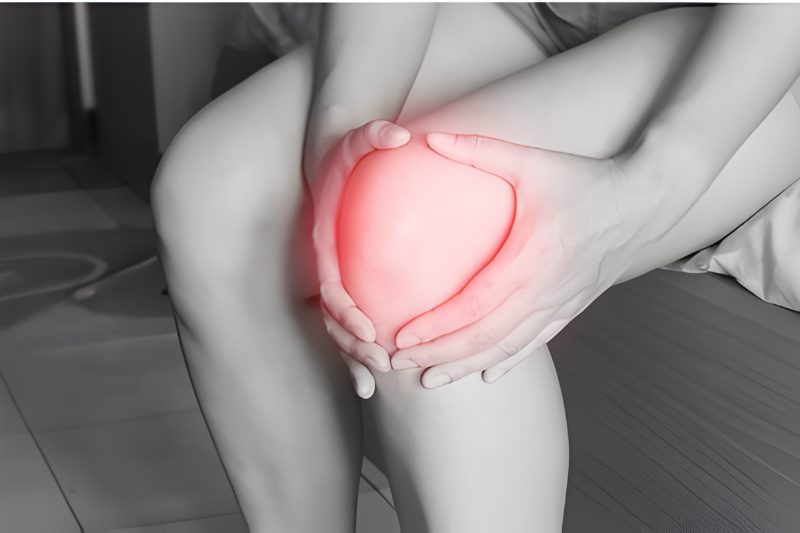
The knee joint:
The knee is one of the largest and complex joint in your body. The knee joint is made up of 3 bones: thigh bone ( femur), shin bone(tibia) and knee cap(patella)
The ends of the three bones where they touch are covered with a smooth and slippery substance known as the cartilage. These cartilages smoothens the movement of bones as they slide on each other during knee bending or straightening movement
Osteoarthritis Of Knee
Arthritis is the inflammation of joints. Although arthritis can affect in any joint of the body but it is more common in knee joint. Arthritis can be of many types but most common is osteoarthritis. It is a degenerative wear and tear type of arthritis which mostly affects people of age 60 and above but it may occur in young people too
In OA knee, the joint cartilage is gradually wear away, they become rough and eventually brakes down, which leads to decrease in joint space. Which in turn leads to rubbing of bone while knee bending and straightening. Other structure within the joint can also be affected. The ligaments in the joint may become thick and menisci become damaged and wear away. In addition to this some new bone outgrowths, called “spurs” or osteophytes , can form on the margins of the joints. Which is also a source of pain. Also, the muscles surrounding the knee can become weak, and the knee joints can become stiff. This makes it difficult to do everyday tasks, such as walking or getting out of bed.
The knee joint may become swollen and stiff making it difficult to bend or straighten the knees, more pronounced in mornings or after sitting for long. Sometimes bending movement makes grinding noise (crepitus). Initially, symptoms may occur only following strenuous work or exercise, but over time may become constant. It is a major cause of loss of work time and disability in many people.
OA of the knee develops gradually over several years. It can be hard to treat as sometimes it is not detected until it has reached an advanced stage.
There are four stages of osteoarthritis, ranging from minor to severe
Stage 1:. People with stage 1 OA may not feel any symptome but there are minor changes in x-ray which only a doctor can find out.
Stage 2: people my feel stifness and pain in knee joint. X-ray during this satge shows narrowing of joint space.
Stage 3: patient start feeling of pain during day to day activities like walking, running, climbibing stairs.
Stage 4: as the deganaration continues, joint space is further reduced. Which leads to rubbing of bones while movement. There are also signs of inflamation in knee joint. People with stage 4 experience constant pain while any movement or sometimes pain persists even in rest.
Diagnosis :
It is not always simple to diagnose OA, as x-ray is not always showing the signs of wear and tear especially in early stages.
Confirm diagnosis can be made by your doctor by information collected through thorough physical examination and taking your family and medical history. Sometimes your doctor may ask for some special investigations like MRI or blood tests to rule out other pathological conditions.
Role of physiotherapy in OA knee:
Physiotherapy can help to reduce the pain , swelling and joint stiffness in knee joint with osteoarthritis. . It can also make it easier for you to walk, bend, squat, and sit.
Passive and active component of physiotherapy treatments—can help make your knee OA more manageable. With passive treatments, the physiotherapist does the majority of the work. But with active treatments, you do more of the work, such as at-home exercises. In fact, a 2000 study found that a combination of manual physical therapy and supervised exercise has functional benefits for patients with knee osteoarthritis and may delay or prevent the need for surgery.
The treatment plan will typically include a combination of the following:
Lifestyle modifications:
- Some changes in your daily life can protect your knee joint and slow the progress of arthritis.
- Minimize activities that aggravate the condition, such as climbing stairs.
- Switching from high impact activities (like jogging or tennis) to lower impact activities (like swimming or cycling) will put less stress on your knee.
- Losing weight can reduce stress on the knee joint, resulting in less pain and increased function Losing even a small amount of weight, if needed, can significantly decrease knee pain from osteoarthritis.
Physical modalities:
Cold therapy : by reducing circulation cold therapy can help reducing swelling.
Heat therapy: by increasing blood flow heat helps in reducing joint stiffness.
Electrotherapy:
1. Transcutaneous electrical nerve stimulation (TENS), which has beneficial effects on relieving pain and improving physical function. TENS is a stimulation that uses electrical currents, which are applied directly to the skin and surrounding the knee.
2. Ultrasound therapy: It is a form of mechanical energy consisting of high-frequency vibrations that can be continuous or pulsed. Pulsed ultrasound produces non-thermal effects and is used to aid in the reduction of inflammation, whereas continuous ultrasound generates thermal effects.
Therapeutic ultrasound is also reputed to reduce oedema, relieve pain and accelerate tissue repair.
3. Exercise Therapy
Strengthening exercises: Your physical therapist will show you certain exercises that you can do at home to strengthen your muscles. Working out muscles in the leg can help make your knee joints stronger. Strengthening these muscles alone can help decrease the pain of knee OA.
Flexibility exercises: Because knee OA often makes it hard to move, flexibility exercises are very important. Doing them regularly can help increase range of motion, make your knees more flexible, and restore normal knee joint function.
Manual therapy: These are some specialized techniques or movements done by physiotherapists. Manual therapy has proven effective to locate and eliminate factors like pain and joint stiffness. (physiotherapy journal 2005)
4. Knee brace: different types of knee brace can be used for treating OA knee like knee sleeves: knee sleeves maintains the warmth and provide mild joint compression. Corrective braces: these are used in cases with moderate to severe OA of the knee. Their purpose is to reduce joint stress on the knee joint.
5 Taping: taping of knee joint can be done to reduce pain and disability.
Surgery is only recommended only when therapies are not effective. there are mainly 2 types of surgeries done in OA patients
knee replacement surgery: in this, the damaged bony surface along with its articular cartilage is replaced with artificial joint. These types or surgeries have long term effect but post operative exercises are very much recommended.
minimal arthroscopic surgery: where only damaged cartilage is removed. But it has short term relief